The next stage of Australia's Digital ID rollout
The private sector gets in on the 'fun' in November 2026...

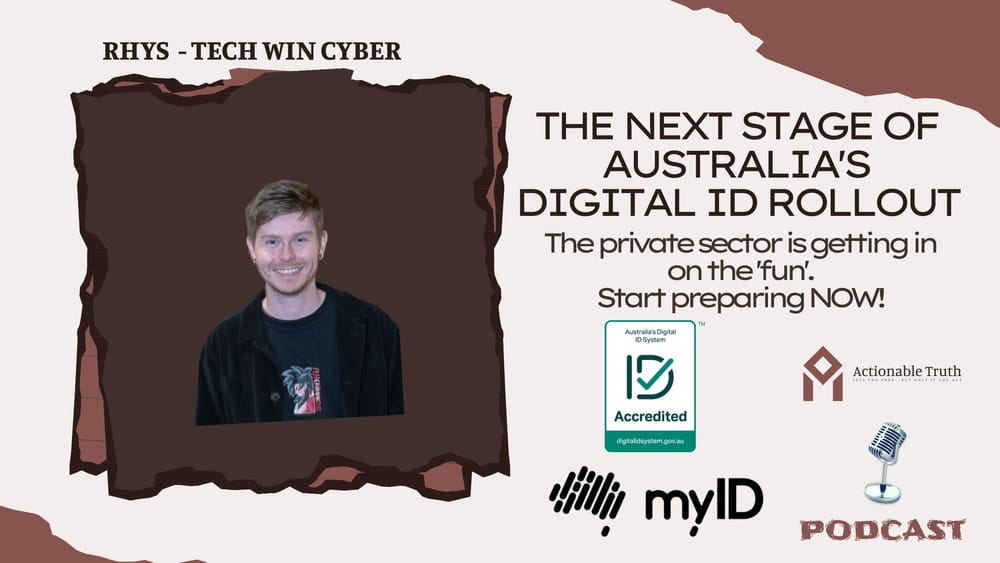
In this episode of the Actionable Truth Podcast I was joined by Rhys Gillen.
Rhys is an Australian cybersecurity professional who also has a YouTube channel called Tech Win Cyber where he published some great videos about the current state of the rollout of Australia’s national digital ID system MyID, as well as the next major stage in the rollout scheduled for November this year (2026).
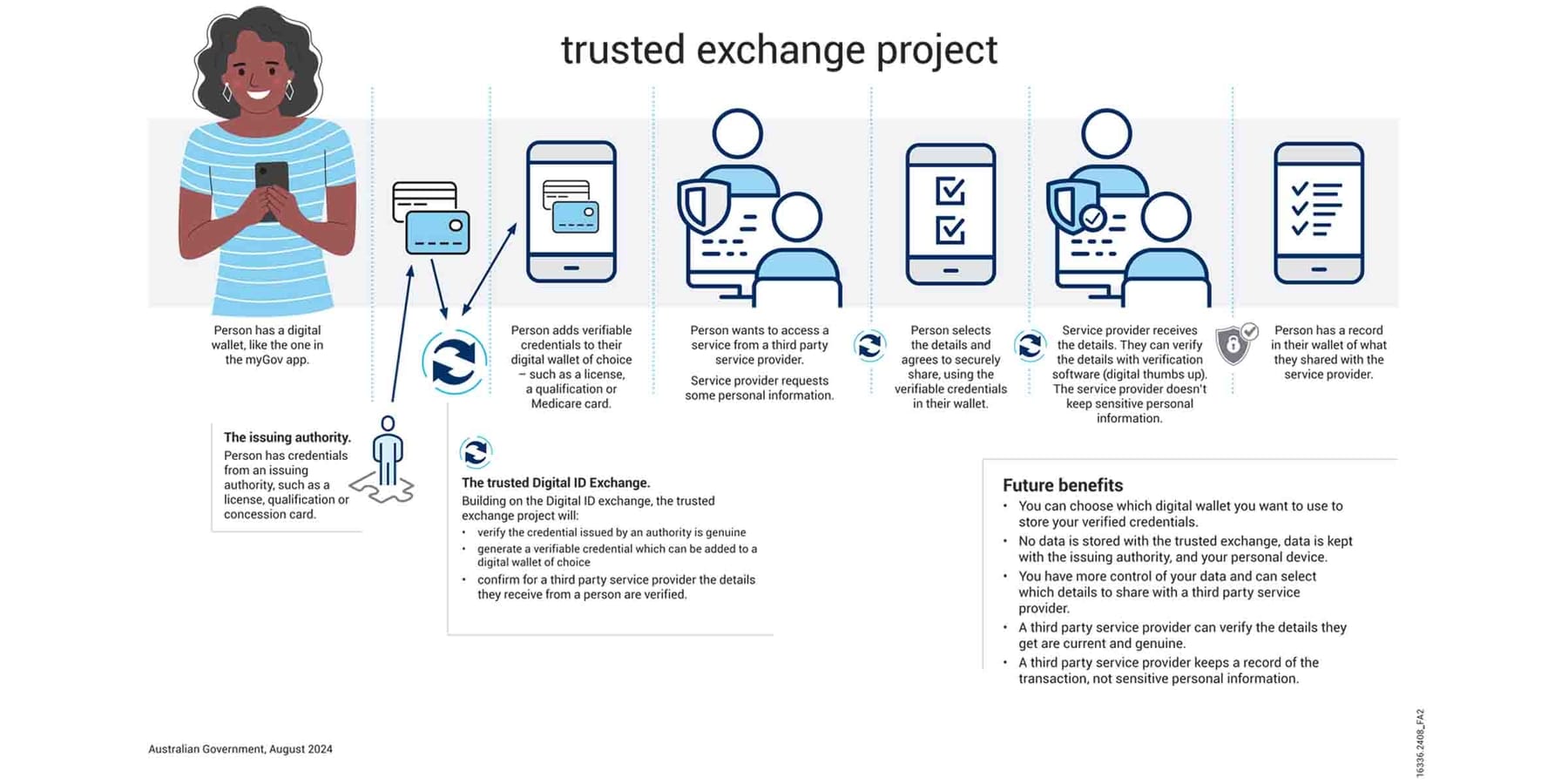
This is when the private sector will be granted access to the scheme through what is known as the Trust Exchange (TEx) & the government's Digital ID trustmark accreditation scheme.
 Tegan Jones
What was discussed?
- The current state of the rollout of the MyID national digital ID scheme in Australia, including the current level of uptake (before any government coercion has even started).
- The next major stage of the rollout, what is its significance and when is it due to take place.
- The impact (both known and potential) of the next stage of the rollout of MyID on individuals and small business owners in Australia.
- What (if anything) can be done at this stage to prevent the next stage of the rollout from going ahead?
- What should individuals and small business owners in Australia do NOW to prepare?
Below are a few highlights:
Both @grhylln and I agree that the current level of uptake of Australia's national Digital ID program spells trouble, especially come November when the private sector can start using it. #digitalID pic.twitter.com/Eg1cBtPCKg
— Actionable Truth Media (@actionabletruth) August 1, 2026
As @grhylln explains here, Digital ID is already MANDATORY in some aspects for Australian business owners. There will no doubt be many more in the near future. pic.twitter.com/D7v7nmfi4M
— Actionable Truth Media (@actionabletruth) August 1, 2026
Where to watch?
You can watch this episode in full below as well as on Rumble and Odysee.
Where to listen?
You can listen to the episode below or anywhere else you get your podcasts, with the exception of Spotify.
Alternatively, you can also add the podcast via the RSS link in any podcast listening app which supports that, such as AntennaPod or Podverse.
Australia's social media ban for under 16 year old has FAILED
But if you think this is win, you are WRONG (unfortunately)
The social media ban has clearly FAILED to stop teenagers from accessing social media based on @eSafetyOffice data.
— Actionable Truth Media (@actionabletruth) August 1, 2026
The next step is for the government to step in and due the "age verification" directly themselves. Here is just one of the implications @grhylln says it will have. pic.twitter.com/JEPFmMNhEY
Back in the December last year (2025), the Australian Government has banned people under 16 year old from using designated social media platforms and at the same time mandated those very same platforms to introduce "reasonable steps" to prevent Australians under 16 from maintaining active accounts on their platforms or opening new ones.
As I predicted in this piece published merely three days after the ban came into effect, this ban has since been either already introduced in many other countries or is in the advance stages of rollout.
 Michael Ginsburg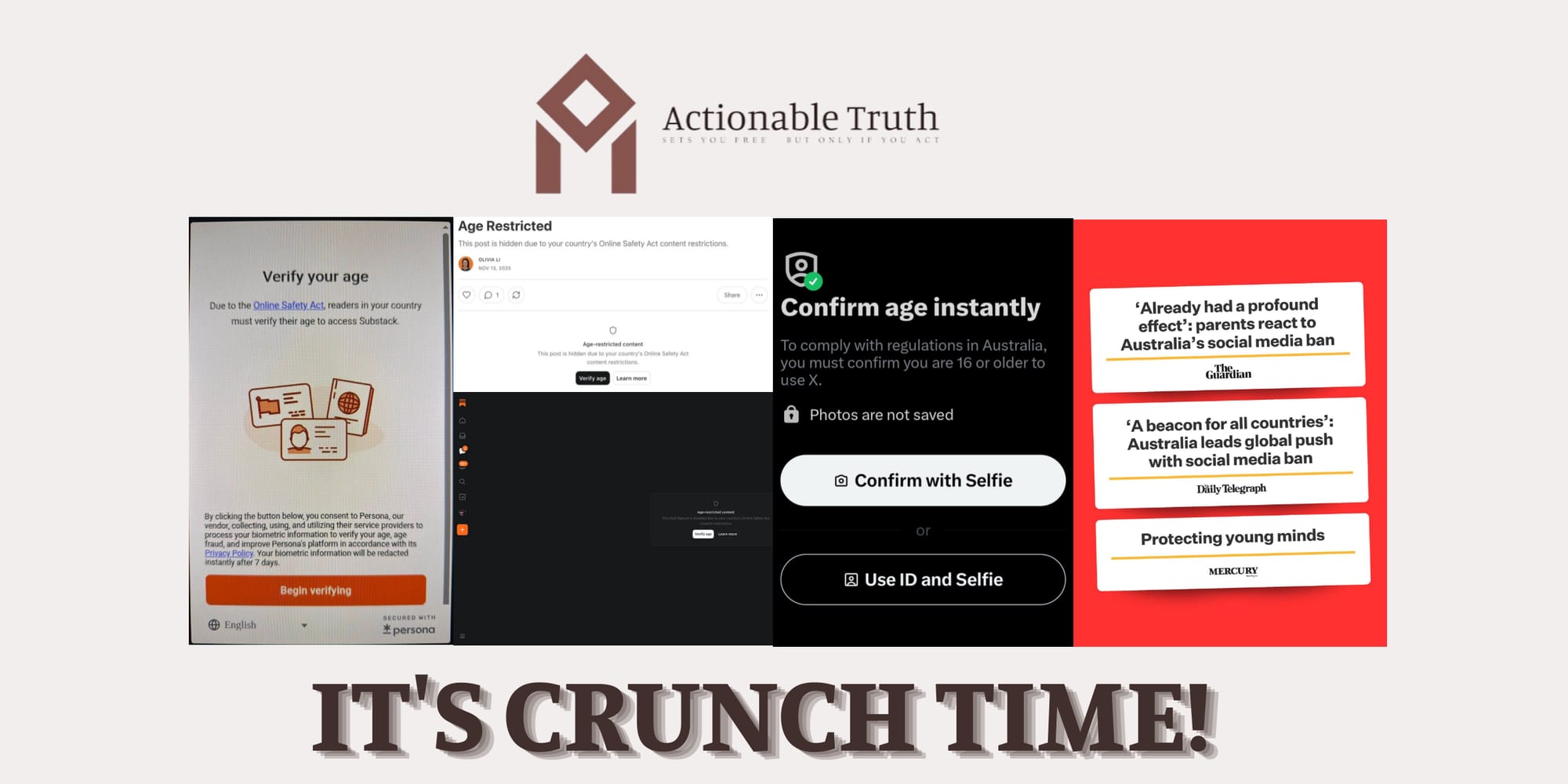
Another prediction I made in the above piece was that this approach will ultimately fail.
This has now well and truly come to pass as confirmed by the government's own enforcing agency, the eSafety Commission.
 Lisa M. Given
 Wren Gillett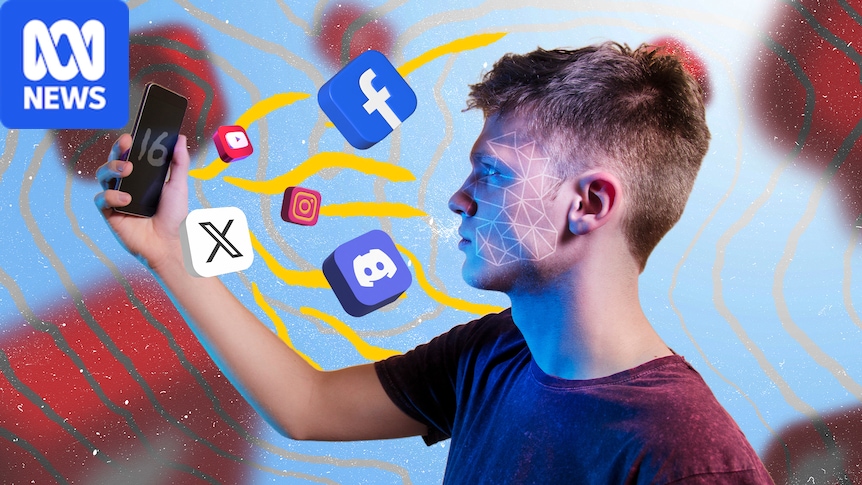
Unfortunately though, this is NOT a cause for celebration because this too was part of the plan all along. The eSafety Commissioner (a.k.a. eKaren) is obviously going to do what was the plan all along:
DOUBLE DOWN!
What happens next?
Exactly what the Australian online commentator Nobody said will happen right before the ban first started in December 2025:
As Rhys and I discussed in this episode, one option that may (and likely) will be used to better enforce the ban in Australia is ConnectID:
Snapchat are already using them through an integration the age verification/assurance provider they contracted (K-ID) has with ConnectID:
 Julie Erissy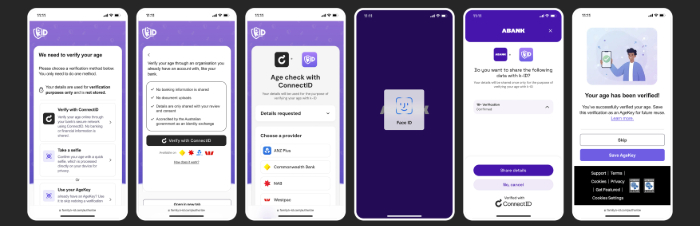
 Julie Erissy
 Joel R. McConvey
MyID has SERIOUS privacy & security issues
but the government clearly doesn't care
As Rhys and I discussed in the podcast, the audit reports for Australia's national digital ID system were far from glowing.
 Ashish Nanda
Obviously the government doesn't actually care about that because there is a different agenda at play here...but nevertheless this can still be useful when deploying the strategy I outline below to prevent further adoption:
 Michael Ginsburg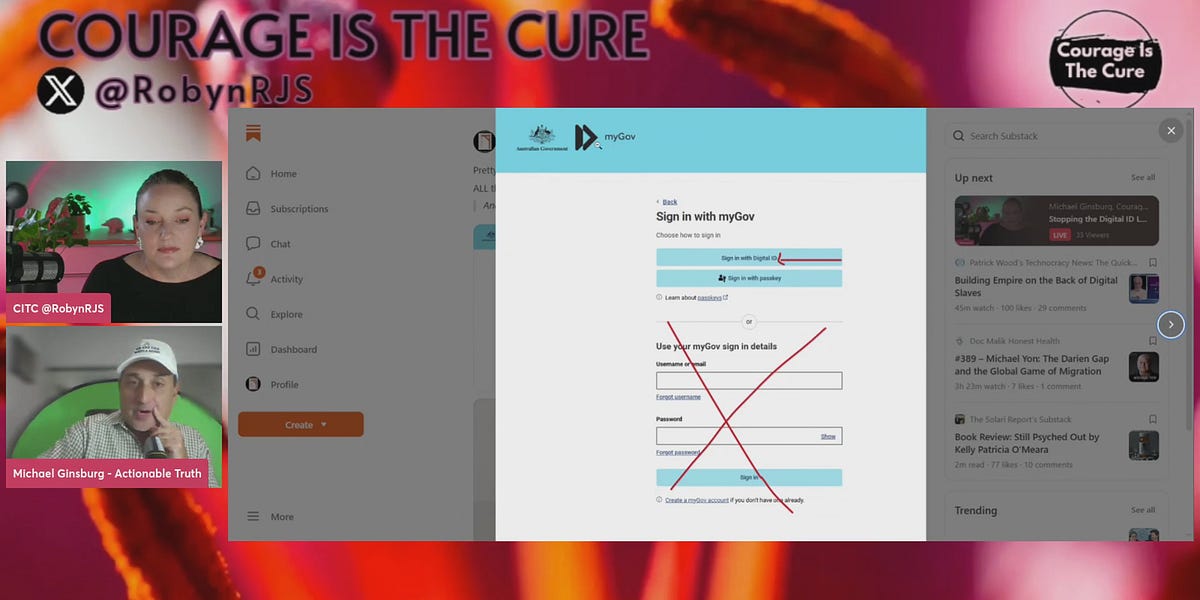
Rhys's videos
Explain things in an easy to understand manner
Rhys has some great videos on his channel about the rollout of Digital ID in Australia, privacy, AI and other related concepts.
The video I recommend the most is the one which directly resulted in me wanting to have Rhys on the podcast:
Another video from Rhys I recommend about the rollout of Digital ID in Australia
Good video from Rhys about the rollout of Digital ID in the UK
Actionable takeaways
What needs to be DONE now
While there is no denying that the situation in Australia is currently looking pretty grim, there are two main actions people in Australia need to start taking right now:
Get yourself off ANY & ALL centralised social media and online platforms in general
As I said in the above clip, the Internet was originally designed to be resilient (but not secure!) and one of the most important aspects which was supposed to enable such resilience was decentralisation.
The Internet was designed to be built around PROTOCOLS rather than around huge platforms which have come to dominate it, especially following the tech crash of the early 2000s.
It is time to get back to that!
Beyond protocols you are probably already familiar with like email (which is a suite of three different protocols), RSS & HTTP/S (which is the protocol you use to browse the web), there are two additional protocols that are worth highlighting in this context.
Nostr
Nostr is a PROTOCOL (i.e. set of standards) which allows you to have a social media identity that is portable.
Your Nostr Identity is comprised of a pair of keys:
- Public key which is like your profile handle; and
- Private key which is like your password (and therefore you must keep secret).
You can learn more about Nostr, including some specific services you can start using right now, in the post below:
 Michael Ginsburg
ActivityPub
ActivityPub is also a PROTOCOL (so again: a set of standards):
ActivityPub is the protocol on which the Fediverse is running. The Fediverse is NOT a single platform but rather various services which all share the same protocol (being ActivityPub):
Unlike Nostr, you do not have full control over your profile and social graph and if you choose a server that ends up banning you, you can lose your followers and handle.
However, you can run your own server (from which you can NEVER be banned) fairly easily if you have a website running on WordPress or on Ghost (which is what I use and what you are reading this on right now).
 Quentin Le Duff (–Q–)
We MUST do whatever it takes to prevent further adoption of Digital ID schemes
While the current 55% uptake rate (if government data is to believed) of Australia's national Digital ID scheme MyID is not good news (to put it very mildly), it is still not high enough to introduce wide ranging digital ID mandates and is definitely not enough to replace the current Fiat system with a CBDC as the only means of payment.
However, we in Australia are unfortunately not far from the point that one or both of the above DO become viable...and the trend line is going in the opposite direction to what I'd like it to be going: Adoption is increasing rather than decreasing or at least stalling.
Rational arguments and explanations were never going to work very well but now they are a complete waste of time.
The ONLY thing that can work right now (and arguably for some time now) is to trigger an emotional reaction...and there is no human emotion that is even remotely as powerful as FEAR!
I explain the strategy in great detail, including specific talking points in this podcast episode and associated show notes I published almost 1.5 years ago:
 Michael Ginsburg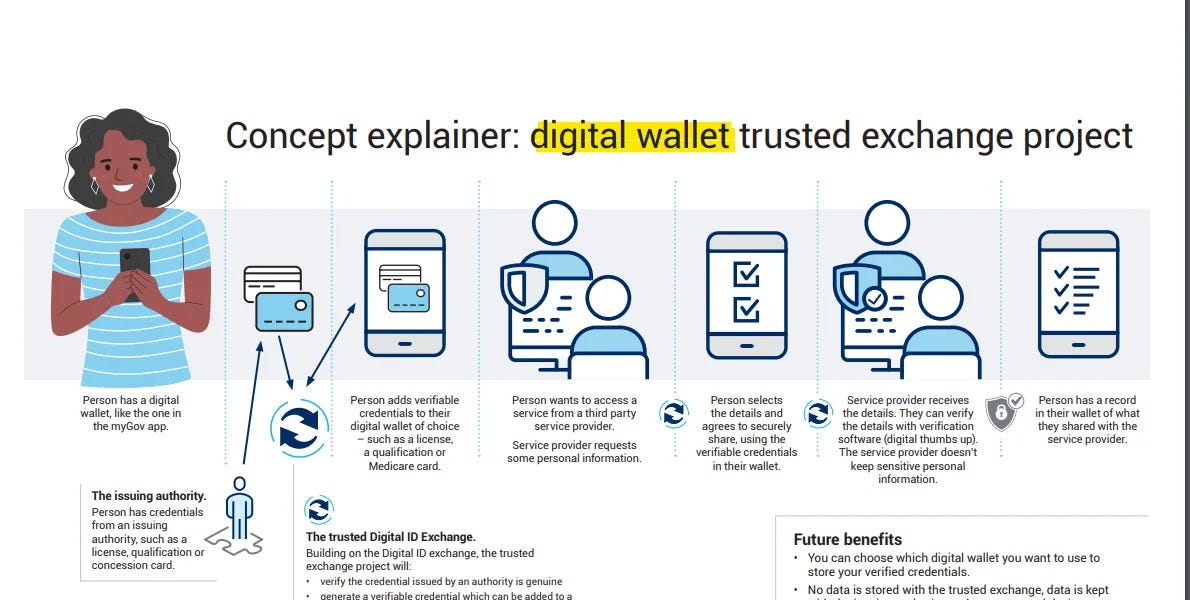
If we acted on what is said there at the time, I am CERTAIN we would not have been sitting at a 55% adoption rate for digital ID in Australia. As I explained at the time, time is of the essence and this is much more applicable now than it was 16 months ago.
We are not quite at the point of no return in which the strategy I outline here is no longer viable...but WE ARE NOT THAT FAR FROM IT!
If the adoption rate reaches 80% or more, we are well and truly SCREWED!
We CAN still turn this around....but I simply cannot do this on my own, no matter how much I'd like to!
If you are ready to help, please leave a comment or get in touch.
In case you need a reminder of what's at stake here, THIS is our very near future if we fail to stop Digital ID:
To allow me to continue this work and expand it further and in pursuit of the mission to “Tell the Truth…and shame the devil”, your financial contribution is greatly appreciated.